Gabrovo – the city of bridges
Gabrovo – the city of bridges
The geographical location of Gabrovo in the valley of the r. Yantra and its constant expansion on both banks, as well as the maintenance of the road through the Shipka Pass, give rise to the natural necessity of developing bridge construction. The Gabrovo bridges are among the wonders of the town and have given Gabrovo one of its nicknames – “The City of Bridges”. Most of them have special architecture and are dedicated to certain events or phenomena, making them unique monuments of culture.
Baev Bridge
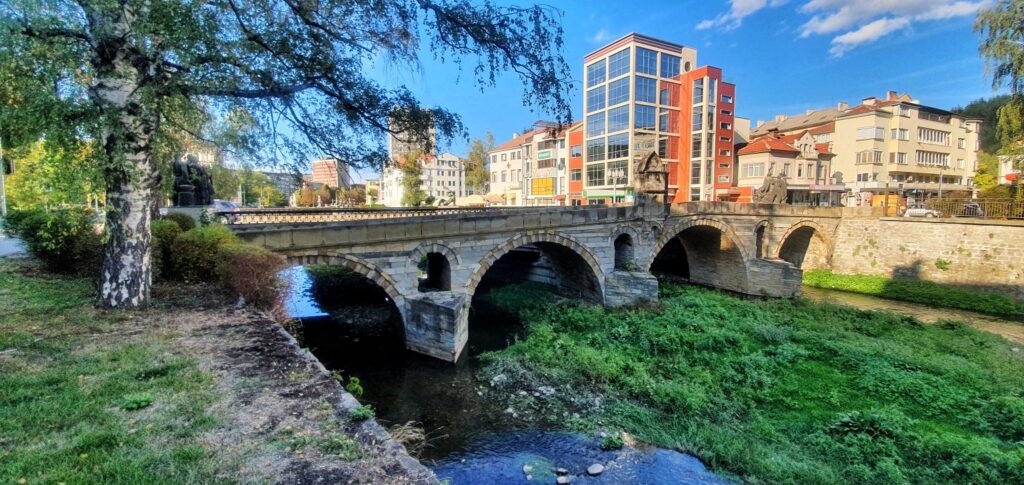
Baev Bridge is one of the few preserved Renaissance architectural monuments in Gabrovo. Its construction became imperative when Gabrovo expanded along the left bank of the Yantra River, and because of the idea of moving the Gabrovo (Aprilov) School to a new building (today’s Aprilov High School).
The bridge was built in 1855 by master Mincho Stoyanov, a student of the famous Usta Kolyo Ficheto. The name Baev Bridge comes from the personal name of the owner of the neighbouring mill – Bayo Dermendzhijata.
On the southern parapet of Bayev Bridge there is a stone slab with two inscriptions – Ottoman and Bulgarian. The Ottoman-Turkish inscription is carved on a special marble slab embedded in the stone one.
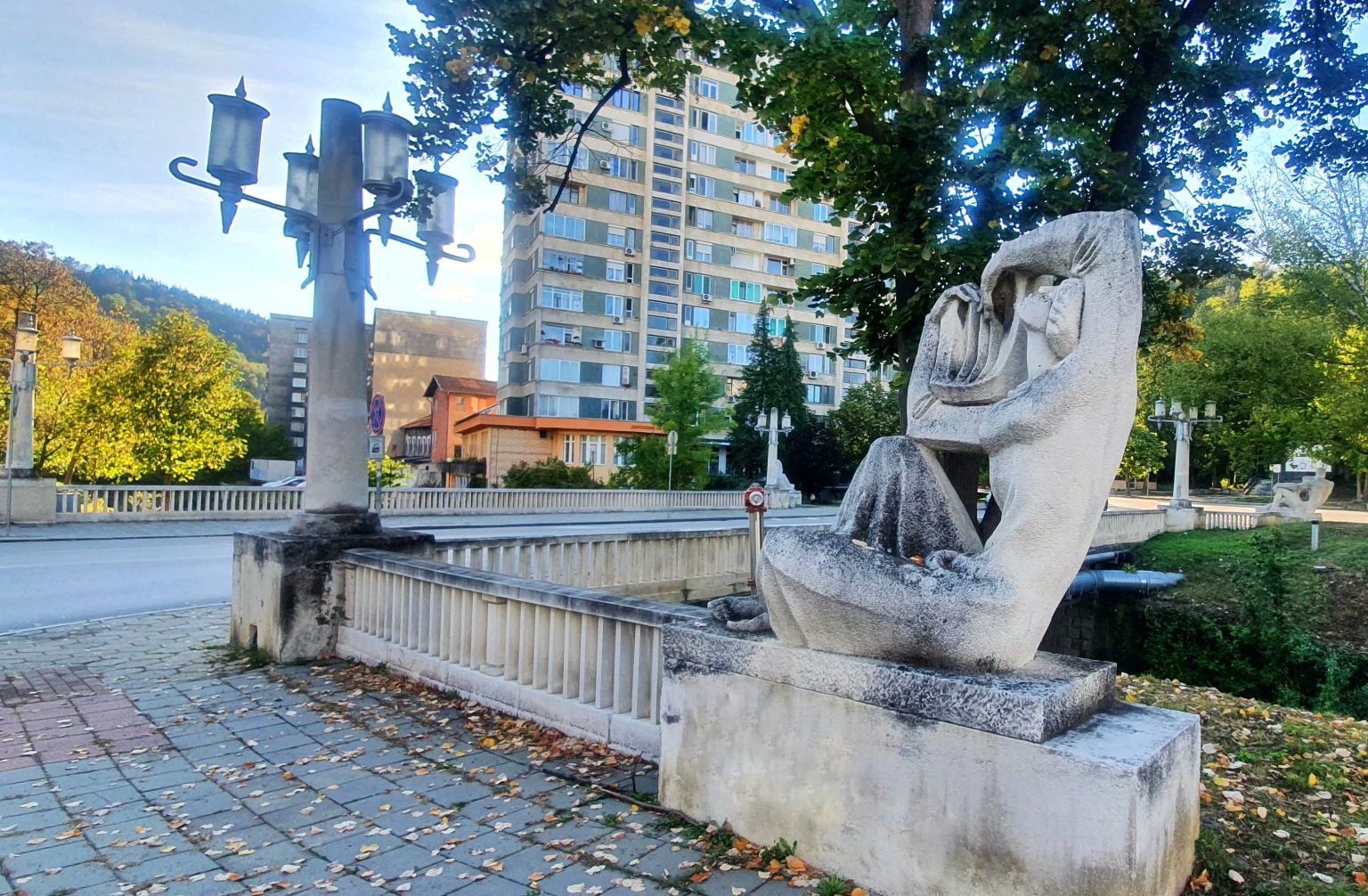
In 1962-1963 a new bridge was built parallel to the old Baev Bridge. In the following years the sculptors Assoc. Iliya Iliev, Dimitar Dimitrov and Boris Gondov from Sofia designed four sculptural compositions on the theme of Rebirth. In 1968, three of them were placed on the bridge, which was named “The Bridge of Revival”. These are the sculptures “Apriltsi”, “The Wounded Insurgent” and “The Schoolwork in Gabrovo”.
The Igo Bridge
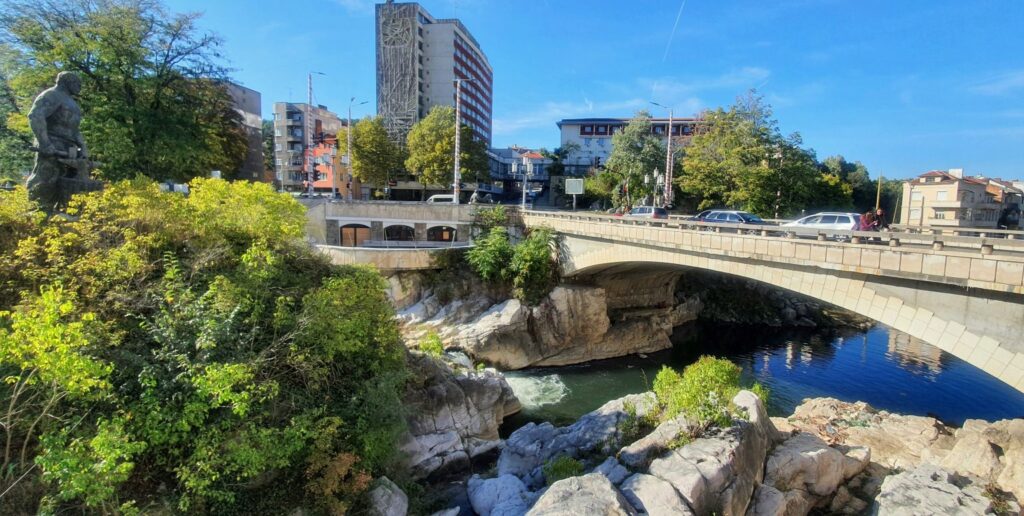
The oldest stone bridge in Gabrovo was built in 1749 at the Gramadata rocks, when traffic on the Gabrovo-Sevlievo-Lovech-Pleven-Vidin road was intensified. The date of its construction was inscribed in Cyrillic on a plaque erected in the middle of the left ledge of the bridge. This slab collapsed during the great flood of 1897.
The construction of the new Igo bridge began in 1935 during the last term of Gabrovo mayor Ilija Kozhuharov. Its construction was completed in a very short time and was necessitated by the need to replace the inconvenient for modern transport Konashki Bridge. Then the rock at the bridge, where the waterfall Gramadata was located, was also broken.
The sculptural figures “Bulgaria in chains” or “Bulgaria under the yoke” (female figure), “The chain is broken” (male figure) and “The invincible Bulgarian spirit” (lion figure) from the bridge “The Yoke” were created by prof. The sculptor is the brother of the famous Bulgarian poet Atanas Dalchev. Another of his works in Gabrovo is the statue of Racho Kovacha near the bridge.
The bridge “The Igo” has one arch and wide railings. At the right end of the upper railing is a sculpted rampant lion; at the right end of the lower railing is a statue of a prostrate naked man breaking the chain of slavery, and at the left is a half-reclining naked woman writhing in the chain of slavery”.
Shivarov Bridge
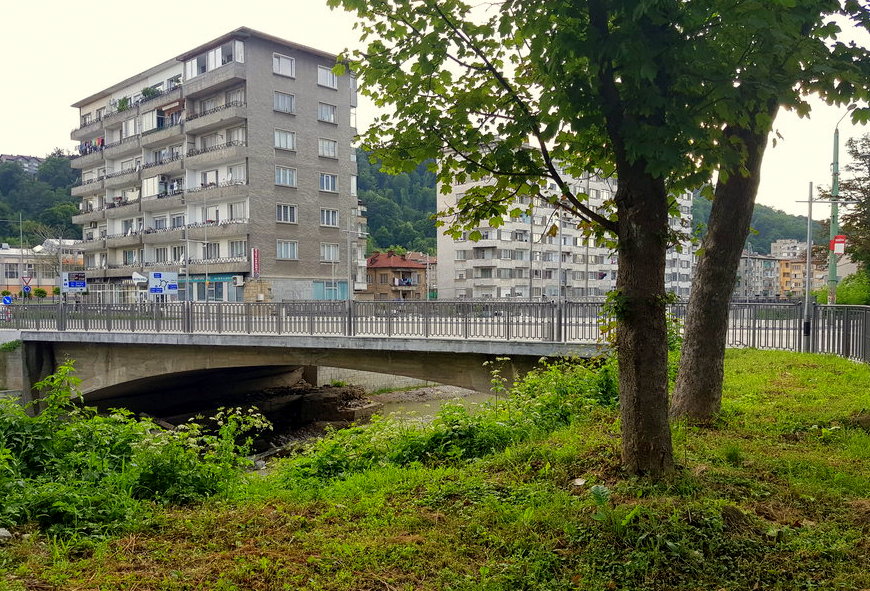
The predecessor of the Shivarov Bridge was built in 1788. This is the so-called Kamenski Bridge or “Shipka”, the second bridge over the Yantra after the Konashki Bridge. At that time Gabrovo had not yet reached this area with its houses, but its construction was necessitated by a change in the route of travellers to the Balkan.
After 1878, the Shipka Bridge became more popular among Gabrovians as the Shivarov Bridge in connection with the warlord and innkeeper Dimitar Shivarov. His house with a saloon-drinking room for banquets, performances, dinners, etc. was located near the bridge. The surname Shivarov is derived from “shavar”, marsh grass.
And this ancient monument of Gabrovo no longer exists. Today’s Shivarov Bridge was built in 1967. Due to its proximity to the Hristo Botev Stadium, it is architecturally shaped as a bridge of sports by the sculptures of prof. Ilia Iliev, Dimitar Dimitrov and Boris Gondov.
Gruncharski Bridge
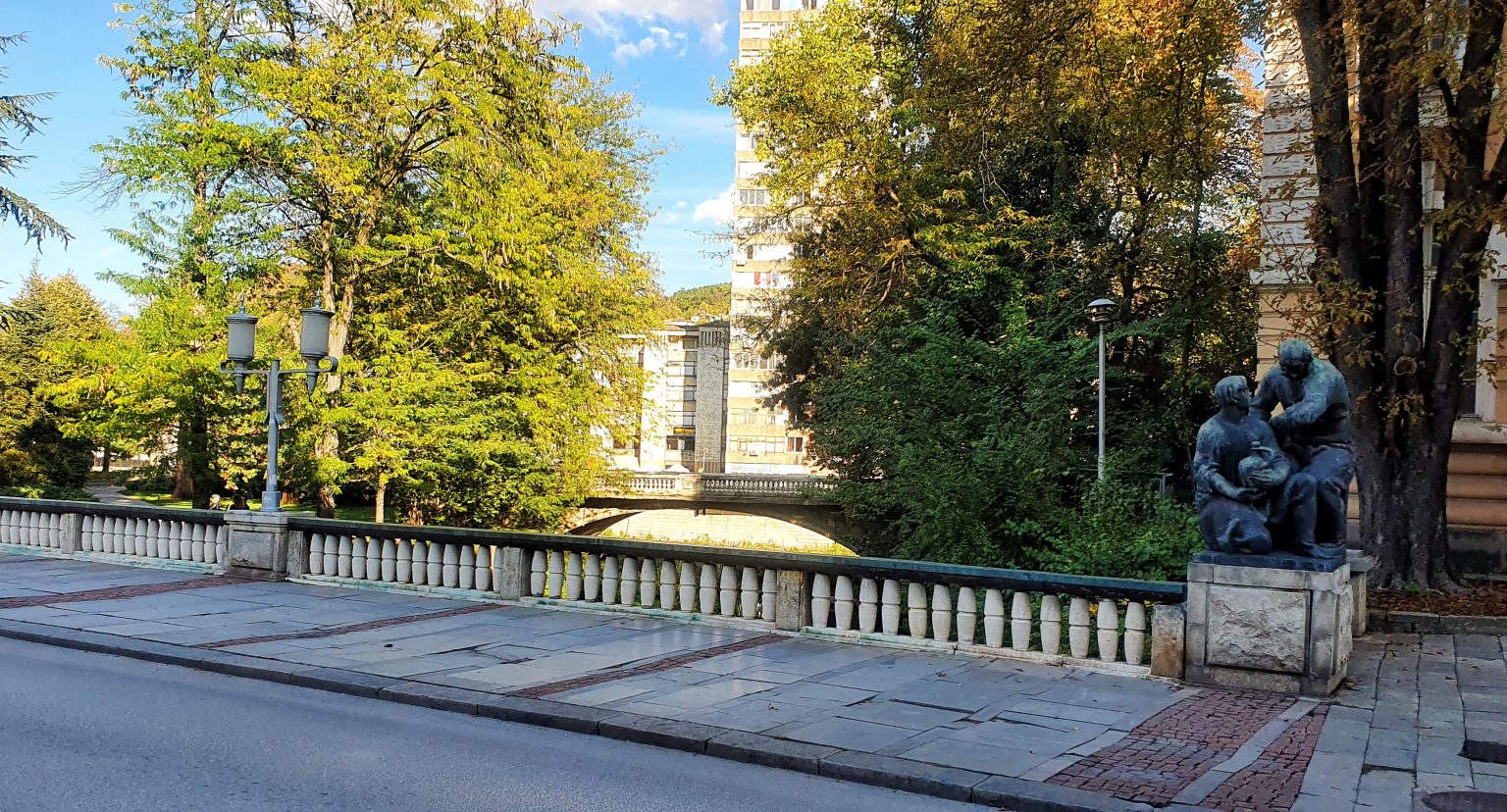
The Grunchar Bridge on the r. Sinkevitsa was built after the Liberation. Its name derives from the Grunchar neighborhood through which the bridge passes. In 1959-1960 the old and humpbacked bridge was reconstructed and widened. In the following years, four sculptural compositions were made and placed on the bridge in 1965 – “Textile Workers” (by Mladen Miladinov), “Leather Workers” (by Dimitar Dimitrov), “Potters” (by Velichko Minkov) and “Builders” (by Vasil Radoslavov). The figures represent the main economic sectors that were developed in Renaissance Gabrovo, which is why the bridge was named “Bridge of Crafts”.
Borovo Bridge
The Borovo Bridge over the Sinkevitsa River was built after the Liberation. Subsequently, a new one was built on its place, known as the Bridge of Arts due to its proximity to the House of Culture and the Summer Theatre. The sculptor Velichko Minekov made the four white stone figures – the Muse of Music, the Actor with a Mask in His Hand (Theatre), the Two Dancing Maidens (Handmaiden) and the Fertility.
Footbridge
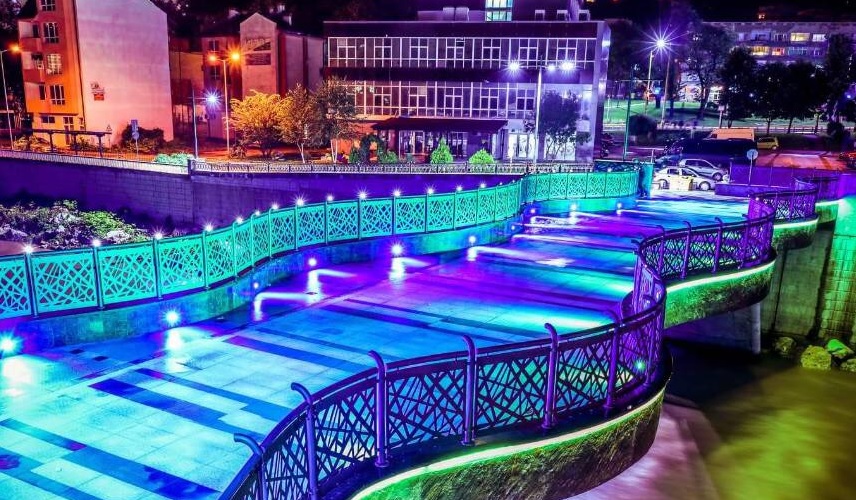
The newest addition to Gabrovo’s famous bridges was completed in 2018 and jokingly named by Gabrovians – the Curly Bridge, because of its specific shape. The bridge is pedestrian and connects the two riverside areas, which offer places for recreation and playgrounds for outdoor sports. Its modern look is also reinforced by the decorative LED lighting, which impresses those passing by in the evening.